


Classroom Strategies
.
October 2026
Every Voice Heard: Communication Supports for Conferences and Whole-Group Time
Communication is more than the words a student says. It’s how they make a choice, ask for help, request a break, answer a question, follow a direction, participate with peers, or share something about their day.
In October, communication takes on even greater importance. Caregiver conferences create opportunities to connect school and home, while whole-group instruction asks students to listen, respond, and participate in ways that may not work equally well for everyone.
At STAR Autism Support, we believe every student has a way to communicate. Our role is to make those communication attempts easier to understand—and to give students reliable ways to participate across people, routines, and settings.
This month, explore practical ways to make communication more accessible during whole-group instruction and carry the same supports into conversations with caregivers.
Make Communication Part of Participation
Whole-group instruction can quickly become a time when some students participate while others watch. Creating more opportunities to respond doesn’t necessarily mean adding more prompts. Instead, consider whether every student has a response mode that works for them.
A student may answer by pointing to a picture, choosing between options, holding up a card, using a gesture or device, or taking a turn with a peer. The goal is meaningful participation—not requiring every student to respond in the same way.
Try this: Before asking a question, decide how students can respond. If the only option is speaking aloud, some students may have no way to join in.
Start with a few simple supports
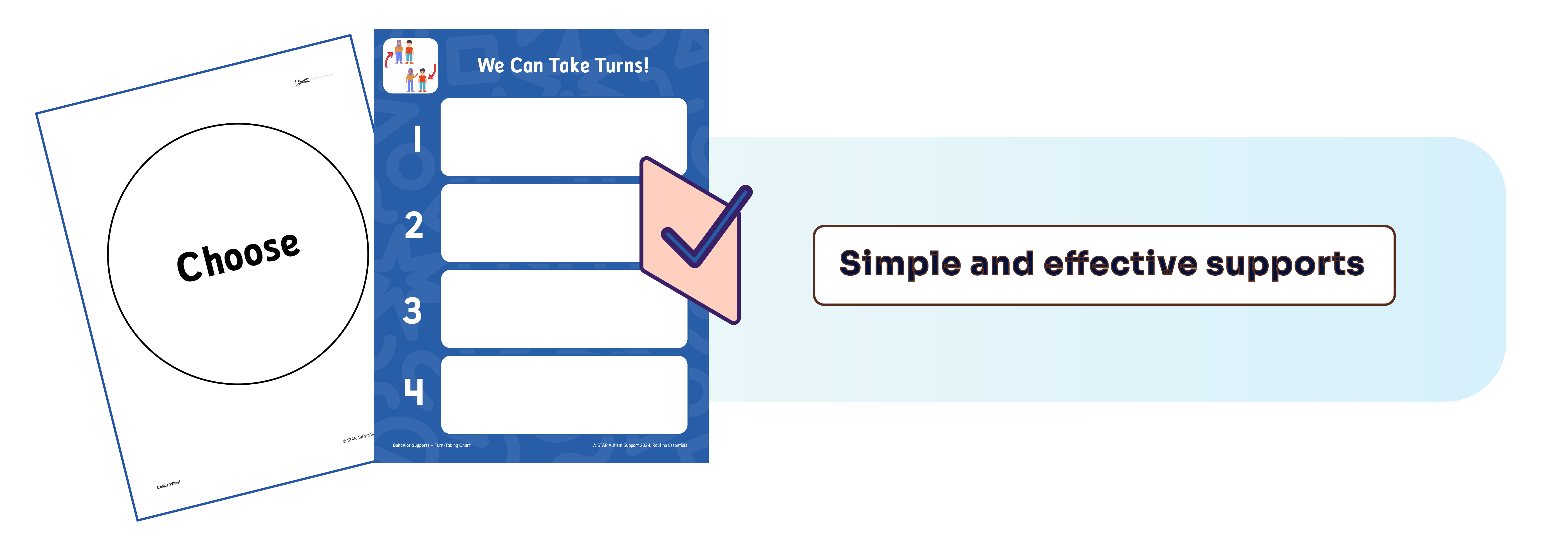
- Themes First! Choice Wheel (English | Español)
Give students a consistent way to make choices throughout the day. Consider adding photos of familiar classroom activities to make choices concrete and meaningful.
- Routine Essentials Turn-Taking Chart (English | Español)
Make participation predictable by showing students whose turn it is and who comes next. Visualizing the routine can make group activities easier to navigate.
- Links Lesson 35: Following One-Step Directions
Communication includes understanding what others say. Build receptive language by explicitly teaching students to follow simple directions within meaningful activities.
Explore these free resources in the STAR Media Center →
Bring Communication Into the Conference
A caregiver conference is more than an opportunity to share progress. It’s a chance to build shared understanding around what helps a student communicate, participate, and succeed.
Before conference week, consider:
- What communication skills are working well? Start with what the student can already do.
- How does the student communicate needs and choices? Consider words, gestures, pictures, devices, or other forms of communication.
- What supports are being used at school? Identify one or two visuals or strategies that could be useful at home.
- Are we using the same language? Consistency between school and home can make communication supports easier for everyone to use.
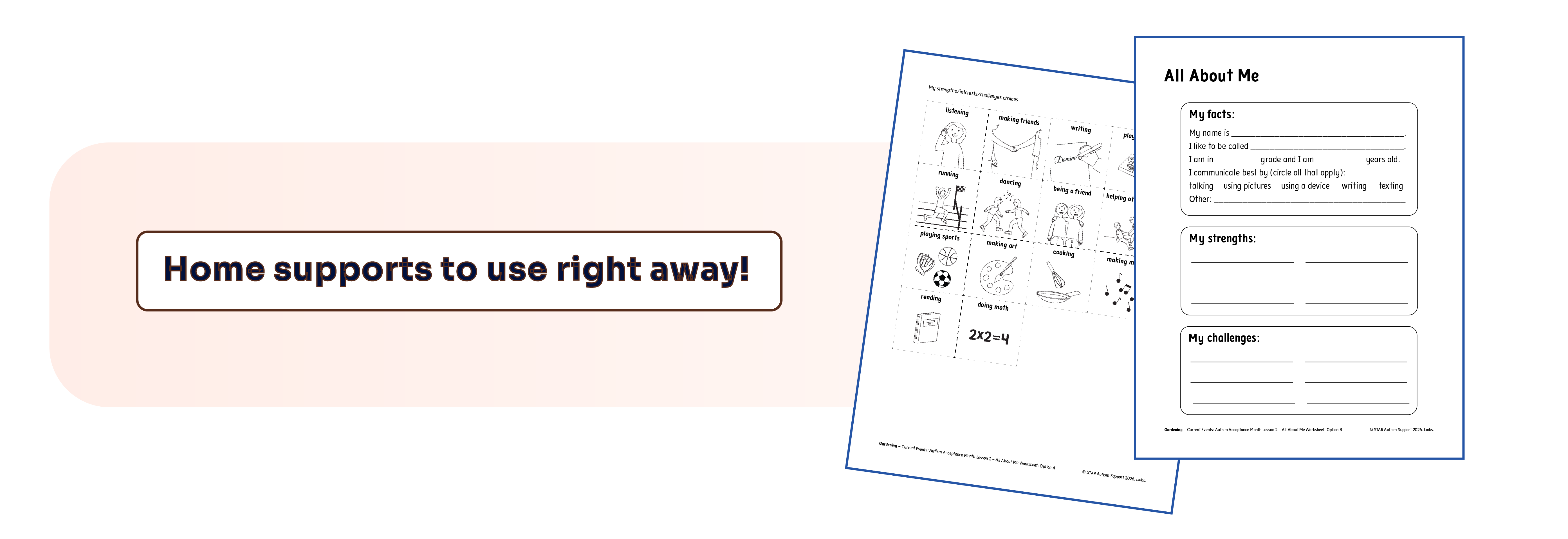
One simple way to strengthen that connection is to send home a support families can use immediately. The All About Me worksheet (English | Español) can also help bring the caregiver’s perspective into the conversation and give teams a fuller picture of the student across settings.
A few useful resources:
Visual Schedule & Picture Supports
Explore Free Home Supports in the STAR Media Center →
Communication Happens All Day
The most meaningful communication practice often happens outside a formal communication lesson.
A student asks for a preferred activity.
A student tells an adult they need help.
A student chooses between two options.
A student responds during a group lesson.
A student communicates that they are finished.
These everyday moments are opportunities to build communication skills in context—and to help students experience communication as a useful way to connect with the people and world around them.
That’s the focus of our upcoming free webinar.
FREE WEBINAR | OCTOBER 14
Communication for All
Looking for practical ways to support communication across everyday settings?
Register for Communication for All →
Before Conference Week: A Quick Communication Check
Use these four questions with your team:
- Does every student have a reliable way to request, refuse, and ask for help?
- During whole-group instruction, who is participating and who is mostly watching?
- What is one communication gain for each student that a caregiver would find meaningful?
- Are school and home using consistent visuals, strategies, and language?
The answers can help shape a more meaningful conference conversation and identify where additional support may be useful.
Turn Connections Into Action
When communication supports are consistent across classrooms, teams, and home settings, they become more than individual strategies. They become part of how students participate in their day.
If your team is looking beyond individual resources and exploring communication supports, professional learning, or implementation support across a school or district, October is a good time to begin that conversation.
Explore the STAR Media Center, browse sample resources, or connect with our team to learn more.
Each month you'll receive:
Free, ready-to-use classroom resources, tips, and strategies
The latest product and news updates
Upcoming trainings, webinars, and events